This week, I listened to an interview of Tracee Ellis Ross highlighting her upcoming docuseries, “The Hair Tales.“ The series uses the metaphor of Black women’s hair to share the struggles, hardships, joy, and beauty of Black women. While I have not seen the series, I hope to learn more about the unique life experiences of Black women. I imagine it has much to say to all women, and maybe men, about our life journey, as well.
Tracee shared that you need to surround yourself with a tribe that loves you even when you can’t love yourself. Powerful words that caused me to ponder.
Who is my Tribe?
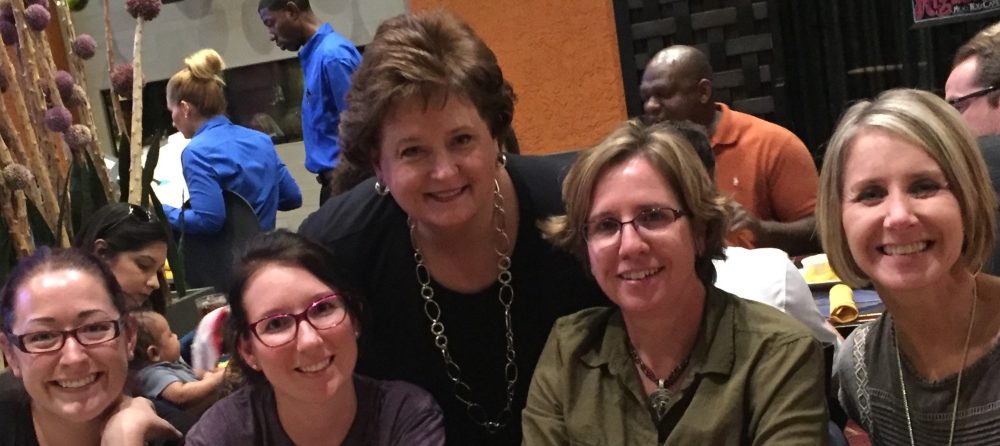
So many times I need that kind of tribe. Perhaps my tribe is more than that. It includes a circle of wise women and men who provide insight so I continue to learn and grow. Sometimes, it serves as a council who pushes me out of difficult places to new pathways or directions. Perhaps, it provides a sisterhood of friends who laugh, cry, or just remain present. Maybe it involves family members who know me well but do not judge me but connect and share life with me. My tribe is a community that allows me to be vulnerable in a safe environment.
Where do Tribes Meet?
In early cultures and some cultures today, tribes of women meet at the well as they gather water for the day. Some women walk many miles and carry large urns to bring water to their families. Others may have shorter distances, but they plan their day around this journey. They come early in the day to avoid the heat. When they arrive at the well, they find other women who share life stories, advice, pain, and joy. They find community that helps them face life.
In the first century, the Samaritan woman came to the well in the hot part of the day because she did not feel part of the tribe. Samaritans and Israelites did not interact with each other, but she was also a troubled woman who’s life choices separated her from others. She found her tribe that day in Jesus, who offer her living water. This encounter changed her life. Jesus loved her and accepted her even in her humanness.
Today, tribes meet in many places. Coffee shops, churches, workplaces, lunch spots, text message groups, phone calls, dinner tables, book clubs, online groups, schools. People join together to talk, to laugh, to cry, or just be present. Some meetings are intentionally planned while others happen spontaneously as we remain open and vulnerable.
How do Tribes Change Over Time?
So does your tribe stay consistent? Or does it change to meet particular needs? My tribe changed over time. I look back through my life with gratitude for a wealth of tribes that walked with me through different life points.
As a young mother, my life focused on caring for my children. I felt isolated as Phil worked as a youth minister and pastor. His days were full of very different things than my day. My tribe included a group of young mothers through my church. We visited over playdates or around Mother’s Day Out. These times served as outlets for my insecurities and anxieties as well as my joys and accomplishments as a parent. We shared books on parenting and opportunities for growth. My tribe included parents of older children who provided perspective and respite as they stepped in a caregivers when I needed a break.
I found tribes at different points in my professional career. As an elementary school teacher, my team served as a sounding board and shared ideas to help me grow as a teacher. They supported me when difficulties happened with students or parents. They encouraged me to apply for opportunities to advance or get support for initiatives. My teaching partner, who was 15-20 years my senior, opened doors to new educational strategies and philosophies, but also listened to my struggles as a parent and pastor’s wife. She loved me unconditionally while being and transparent and honest. As I moved into teaching at the university, my graduate students became an important tribe for me. They loved education and learning as I did. We shared their experiences in the field and their desire to continue to grow in their knowledge and expertise. They truly became my lifelong tribe.
In each place, I naturally formed tribes of women who shared my passion, drive, and love of learning. We discussed ideas. We asked questions that others might not consider. We struggled with social issues that lacked a clear solution. We read books together and shared books that helped us learn and grow. We responded when some in our tribe suffered illness, deaths, and celebrations. We took joy in our children’s accomplishments and hurt when our children faced difficulties. We picked each other up to get on track again.
Through it all, my husband, son, and daughter remained my tribe. Conversations included deep insights and affirmations. They know me like no else. Even with my flaws, they appreciated my intent and affirmed my personhood. They cried with me when my hurts seemed unbearable. They celebrated my accomplishments and achievements. This tribe stayed strong – and yes, they loved me even when I couldn’t love myself.
How Do We Create New Tribes?
We need to create new tribes. People move away. People die. People need new experiences. So, we form new tribes. These tribes not only meet our needs but allow us to be the tribe for others.
Recently, we helped form a small group that serves as our tribe. As our lives changed over the last few years, we felt the need for a place to experience vulnerability and openness with people in a similar stage of life. This group comes together to share food and deep discussions about spiritual and theological topics as well as social issues and life experiences. People in this group hold varying views. Rather than arguing or trying to convince others to move to our “side”, we listen, ask questions, and think deeply about what each person says. We consider changing our minds but do not feel forced into doing so. We learn together and provide space for us to think and talk. We close each meeting sharing the Lord’s Prayer.
Gratefully, I never needed to go to the well by myself. I found a tribe at the well. I realize not everyone has this blessing. I encourage you to look for a tribe in your life. Your tribe may include you and one other person who loves you unconditionally and helps you grow. Your tribe may offer a small group of wise women or men. Your tribe may have similar or different characteristics and life experiences. You may find your tribe in a spiritual, work, or family setting.
Come to the well to find your tribe, and you will find living water.

 As a student leader, do you see yourself in a position in your club, group, organization, or athletic team? Or do you recognize the role and responsibilities you have to your fellow students you lead? The view of a position can hinder student leaders from taking ownership for the responsibilities you have for your fellow members or teammates. You may think or assume that hazing does not happen on our college campus.
 Hunger. The mention of the word conjures up images in the collective minds of society. Everyone has various mental images of hunger, depending upon their perspectives. Perhaps some think of starving children living in a dusty, desolate Sub-Saharan village, stricken by drought and famine. Others may think of urban inner-cities, haunted by the heavy atmosphere of poverty, producing a hungry and homeless population. Thinking of hunger probably does not elicit thoughts of college students strolling through a tree-lined quad or opening the creaky doors of an ivy-walled library, stepping into the distinctive, musty scent of knowledge that can only be produced by books. Yet, here the nation stands, surrounded by the advancements of the 21st Century, and plunging deeper into a crisis of hunger on college and university campuses. Hunger? Hunger seems to be a concept incongruent with mental images of healthy, happy college students. Unfortunately, that mental image of a carefree college student remains elusive, as hunger shapes reality for too many postsecondary students today.
 In a perfect world, students would attend college and not once worry about their risk for sexual assault. Unfortunately, this is not the case for students in higher education. In 2011, the U.S. Department of Education’s Office of Civil Rights released a Dear Colleague Letter, which stated that one in five women will experience sexual assault while in college (Ali, 2011). In fall 2017, approximately 20 million students enrolled for the fall semester, 11.5 million of which were female (National Center for Education Statistics, 2018). Going by that one in five prediction, 2.3 million of these women will experience a sexual assault while in college, which does not take into account men or students in the LGBT community. One rape is already one rape too many. But millions? Higher education institutions need to take action.
 Policy makers and K-20 educators attempt a range of structural and programmatic solutions for combating the issue of academically underprepared students entering colleges and universities. Options exist in high schools to increase academic rigor including programs such as Advanced Placement (AP) and International Baccalaureate (IB); however, the focus primarily remains on dual credit (DC) as the primary strategy to address these challenges.
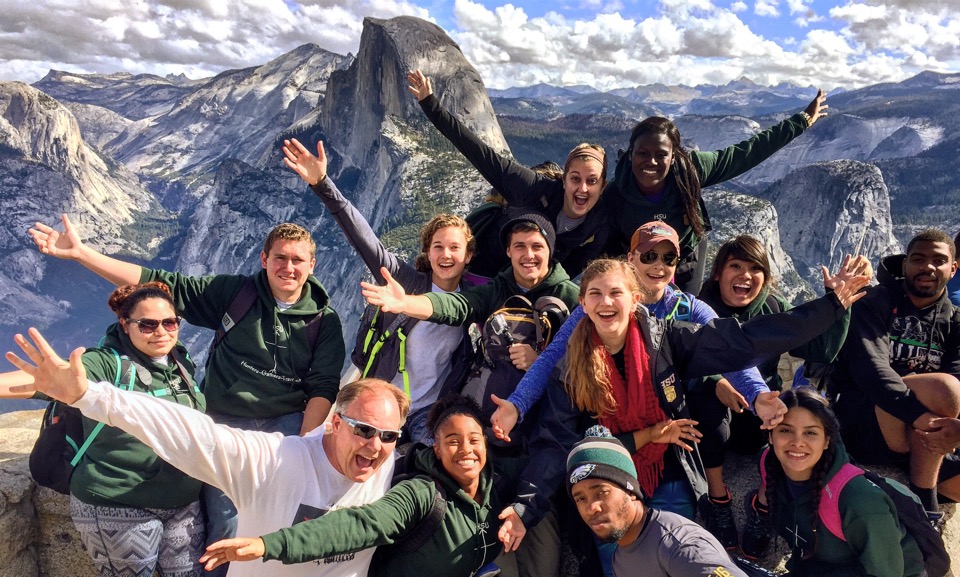 The United States’ national parks are known as “America’s greatest university without walls,” yet the Interior Department reports that the number of college-age visitors fell from 27% to 19% (Blaszak, 2006). Interest from college students normally sparks when they visit the parks as a child, but the annual number of visitors under the age of 15 has fallen by half in recent years (Bergeron, 2015). Two scientific studies show why educators need to get their students out to America’s most beautiful places.
 tion in the classroom. The lack of direct input from students with concussions means professionals have limited insight into perceptions about students’ challenges and successes associated with college experiences (Childers, 2016).
 orce. Tenure allows many faculty members to work past the age of 70, which influences the availability of tenure positions (Kaskie, 2017). To complicate matters even further, politicians are turning their focus to addressing tenure (Craft, Baker, & Finn, 2016). In 2015, Wisconsin Governor, Scott Walker, asked the
 ow how to help. An unrealistic list of expectations sits quietly in the back of many students’ minds whose perfectionistic nature causes them to overextend, creating stress. Other students self-medicate by resorting to drugs and alcohol to numb their pain.
 Alice in Wonderland believed in as many as six impossible things before breakfast to remind herself that possibilities surround her (Walt Disney Studios, 2010). Higher education deals with impossible things every day as well: from student persistence and accomplishment, to doing less with more, to ensuring that people receive opportunities to further their education and finally to asking people to give back to universities. As a university, we can make impossible things happen when we view our institutional priorities through a lens of giving back and establish a culture of philanthropy.
 Ponderings